Book&Play: Leading Design on a Sports Booking App
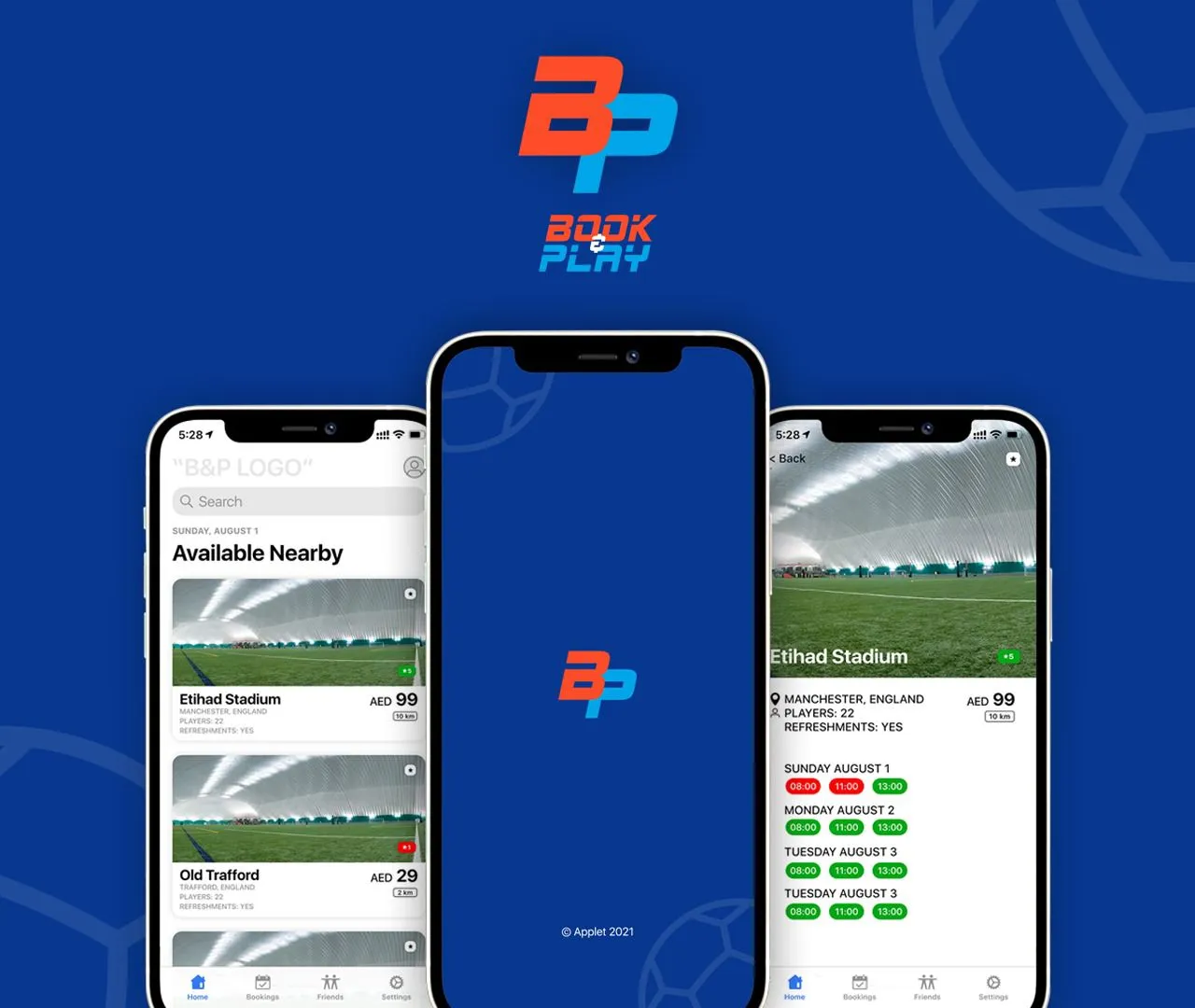
This was my first real project in a professional setting: a 2-month internship at Griffin-Kye in Dubai in 2021, where I ended up leading a team of five interns on Book&Play, a booking platform for football and sports grounds across Android and iOS.
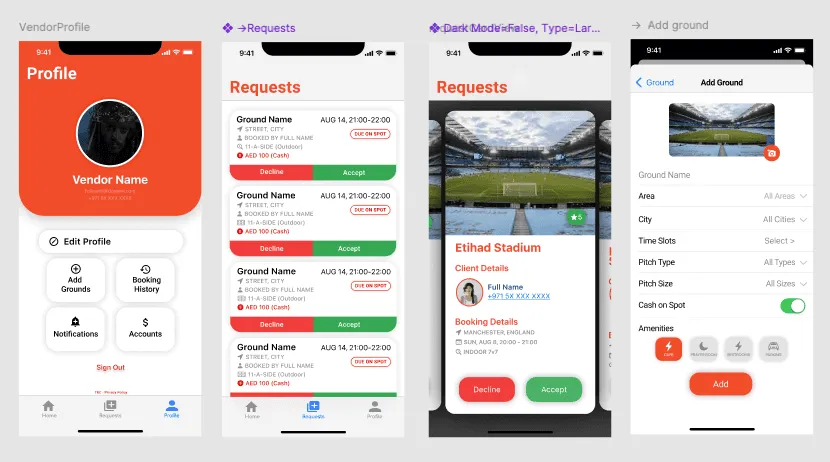
The brief was straightforward on paper and broad in practice: let people find and book a ground, see availability by time slot, and manage it from both sides of the transaction. That split runs through the whole app, right down to the colour scheme: vendor screens in orange, user screens in blue, so the two sides of the product were visually distinct at a glance.
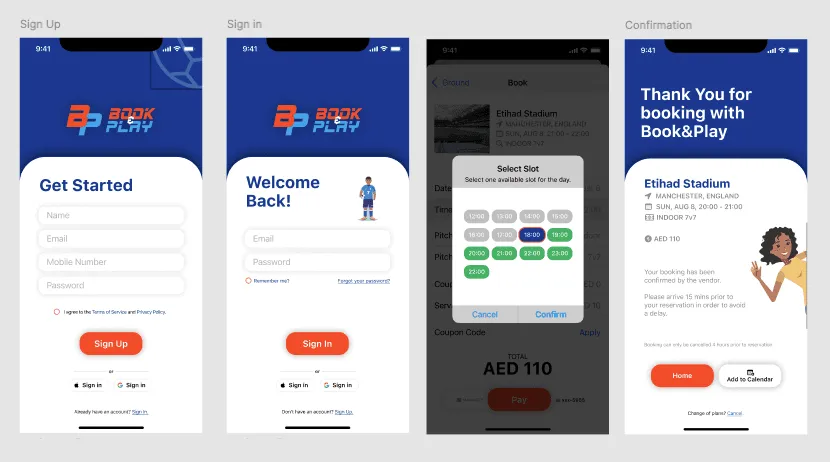
On the vendor side: a dashboard for upcoming bookings, the ability to accept or cancel requests, tools to manage their grounds, and visibility into reviews left by players. On the user side: a landing page surfacing available grounds nearby, an interactive booking flow for selecting time slots, payment method selection at checkout, and a two-way review system so both players and vendors could rate each other after a booking. Sign-up used Google and Apple sign-in APIs.
I started with a concept mockup in Photoshop before the team moved into Figma (a design tool), where most of the actual design language took shape: splash screens, wireframes, and the full path through sign-up, booking and confirmation. Alongside leading design, I coded the iOS app myself in Swift (Apple’s programming language) using Xcode (Apple’s app-building software). Every screen on both the user and vendor side ran and behaved as intended, but it was never connected to a backend. The other four interns picked up the design language I’d set and extended it into additional screens, and also handled the Android side of the build.
The app never made it to a public launch in the time we had, and the project was shelved soon after. What’s left is the prototype and the Figma file: a full two-sided product, designed and partly built, that was never launched.